
.png)
Pet Care is a mobile application concept designed to connect veterinarians and pet owners through a unified, efficient, and intuitive platform. The app enables pet owners to schedule appointments, track pet health records, receive vaccination reminders, and manage multiple pets in one place. Veterinarians also benefit from a centralized system that helps them view pet profiles, update medical records, and streamline clinic communication. This project was completely self-initiated and designed to explore how digital tools can simplify veterinary care and improve health management for pets and their owners.
I took on the role of Lead UX Designer, handling the full end-to-end design process. My responsibilities included: User research, Problem definition, User flows, Wireframing (paper + digital), High-fidelity UI design, Prototyping in Figma, Basic usability testing, Accessibility considerations, Design iteration.
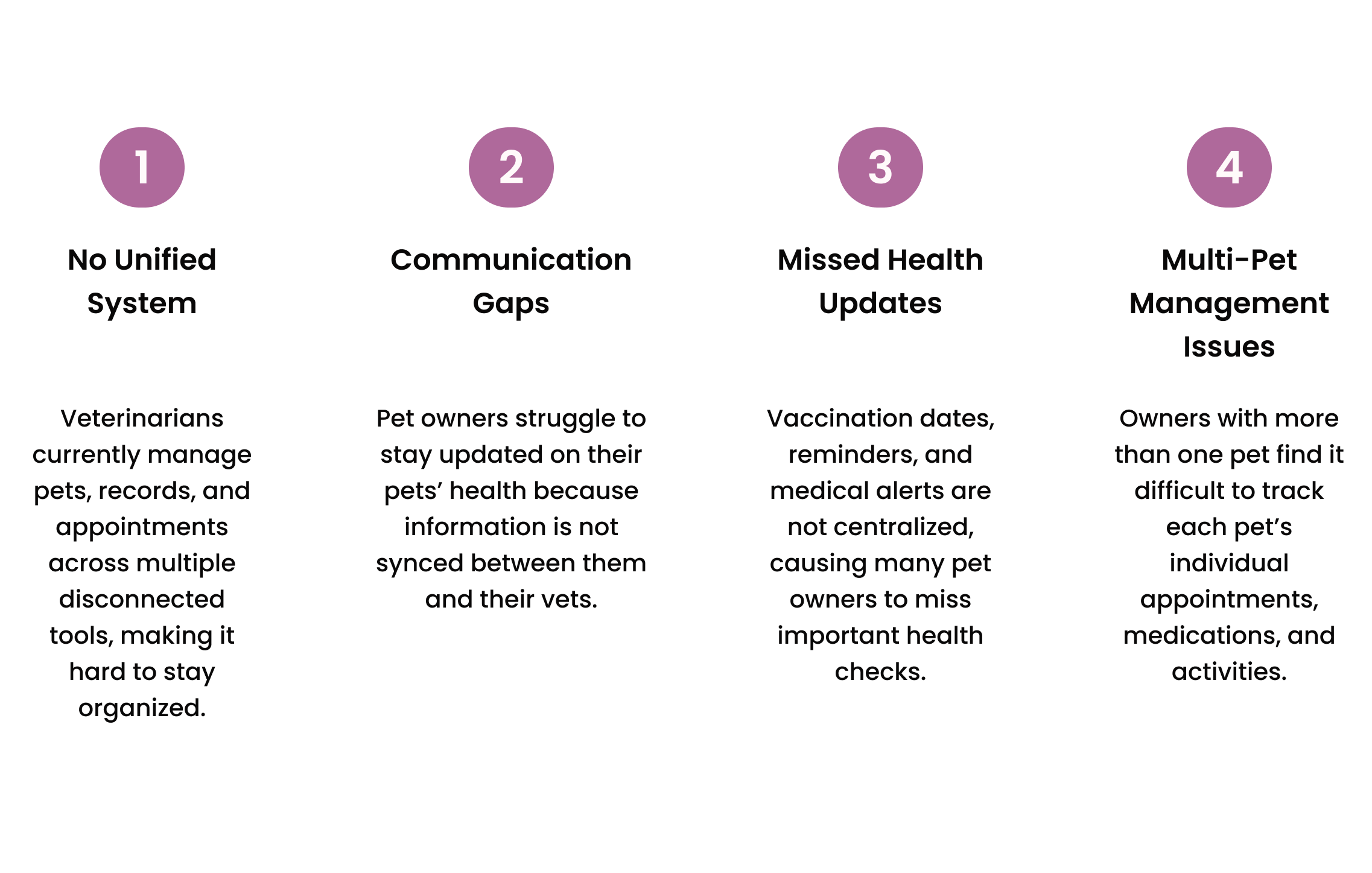
Both veterinarians and pet owners struggle with fragmented, inefficient health management systems.
1. Veterinarians lack a unified platform to manage pet records, appointments, and communication.
2. Pet owners forget vaccination schedules, upcoming appointments, and key health updates.
3. Managing multiple pets becomes confusing without a central system.
These gaps often lead to missed appointments, poor health tracking, and difficulty syncing health information between both parties.
1. Create a unified digital platform for managing pet health records.
2. Provide reminders and real-time updates for vaccinations and treatments.
3. Simplify appointment scheduling for both pet owners and vets.
Pet Owners
Want to easily access health information, track vaccinations, book appointments, and manage multiple pets.
Veterinarians
Need a structured system to view medical histories, manage appointments, and update treatments.
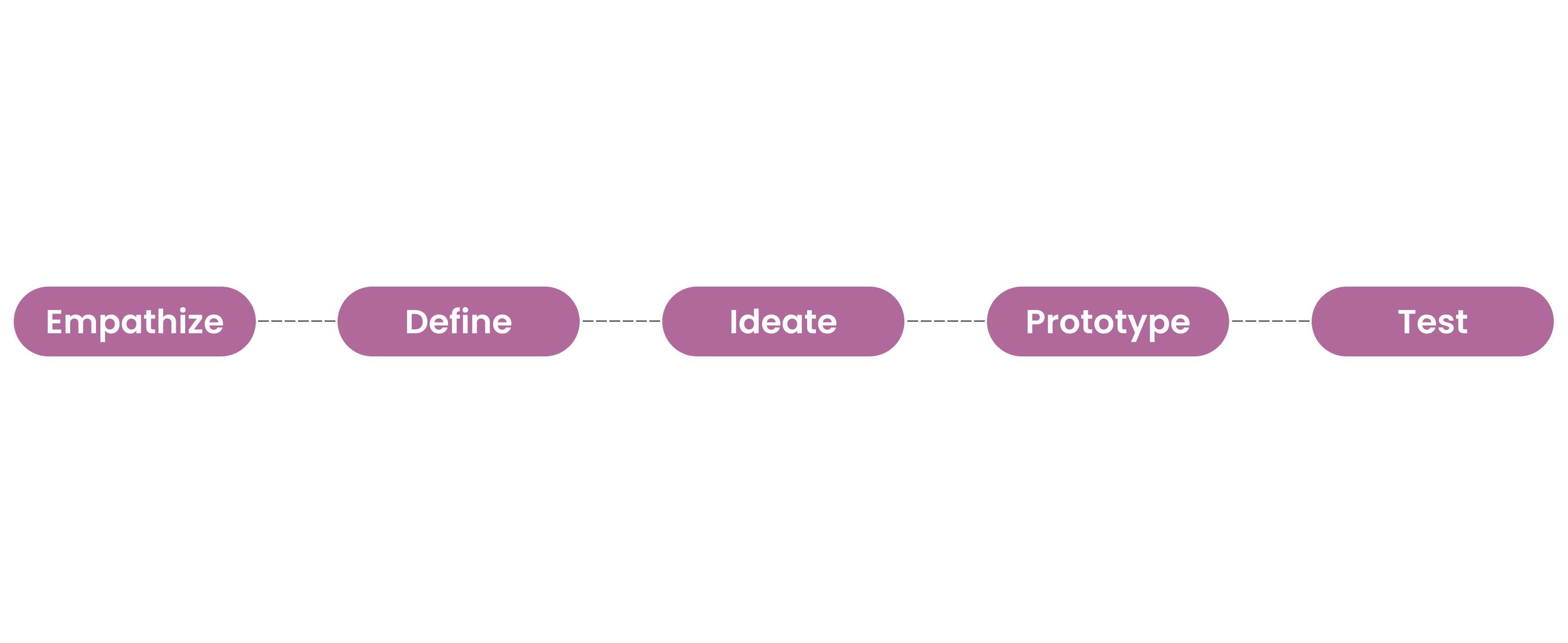
I followed the Google Design Thinking framework, moving through the stages of Empathize → Define → Ideate → Prototype → Test to create a practical and user-centered solution for pet owners and veterinarians.
I began by exploring how people currently manage pet health, speaking with a small group of pet owners and reviewing how vet clinics handle appointments and medical records. These early findings helped me understand common challenges such as missed vaccinations, unorganized health records, and difficulty scheduling appointments. From these insights, I developed user personas to reflect the needs of different types of users, including busy professionals, students, and veterinary staff.
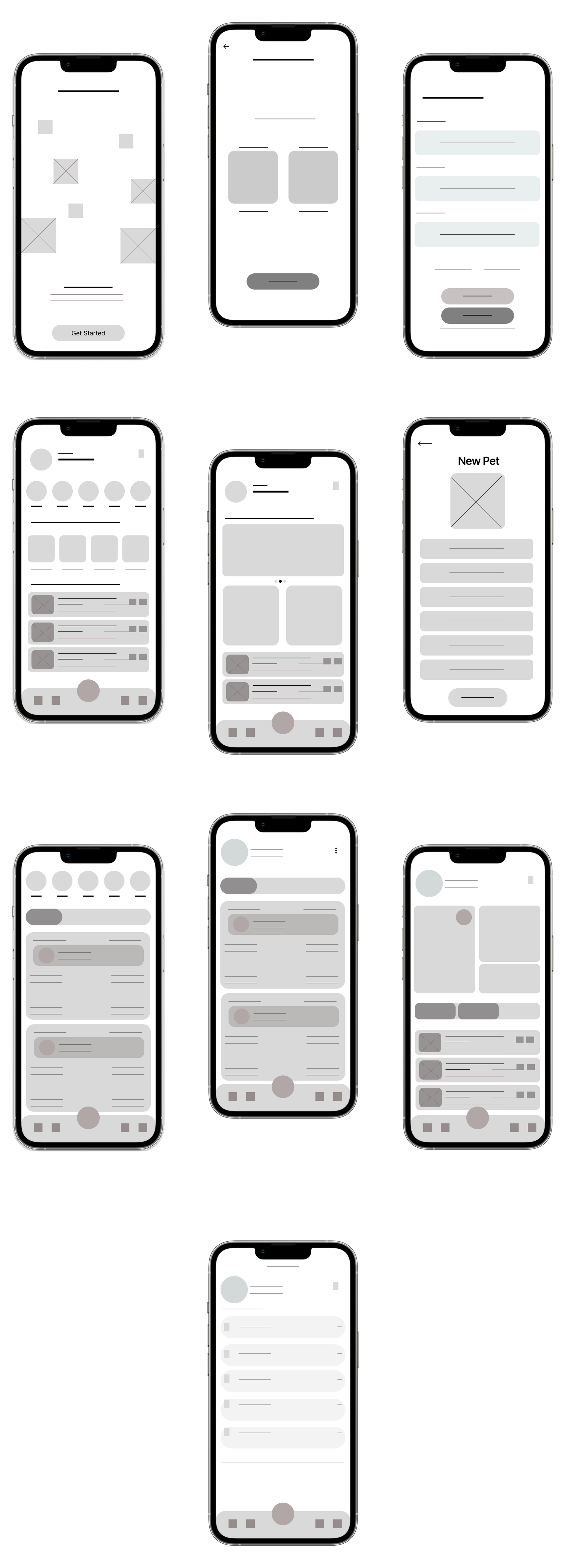
With the problems defined, I mapped user flows to understand how users would interact with the app and started sketching early wireframes to explore possible layouts. I then translated these into digital wireframes in Figma, gradually refining them into high-fidelity designs. After building an interactive prototype, I conducted basic usability testing to validate core features like appointment booking, managing multiple pets, and accessing health summaries.
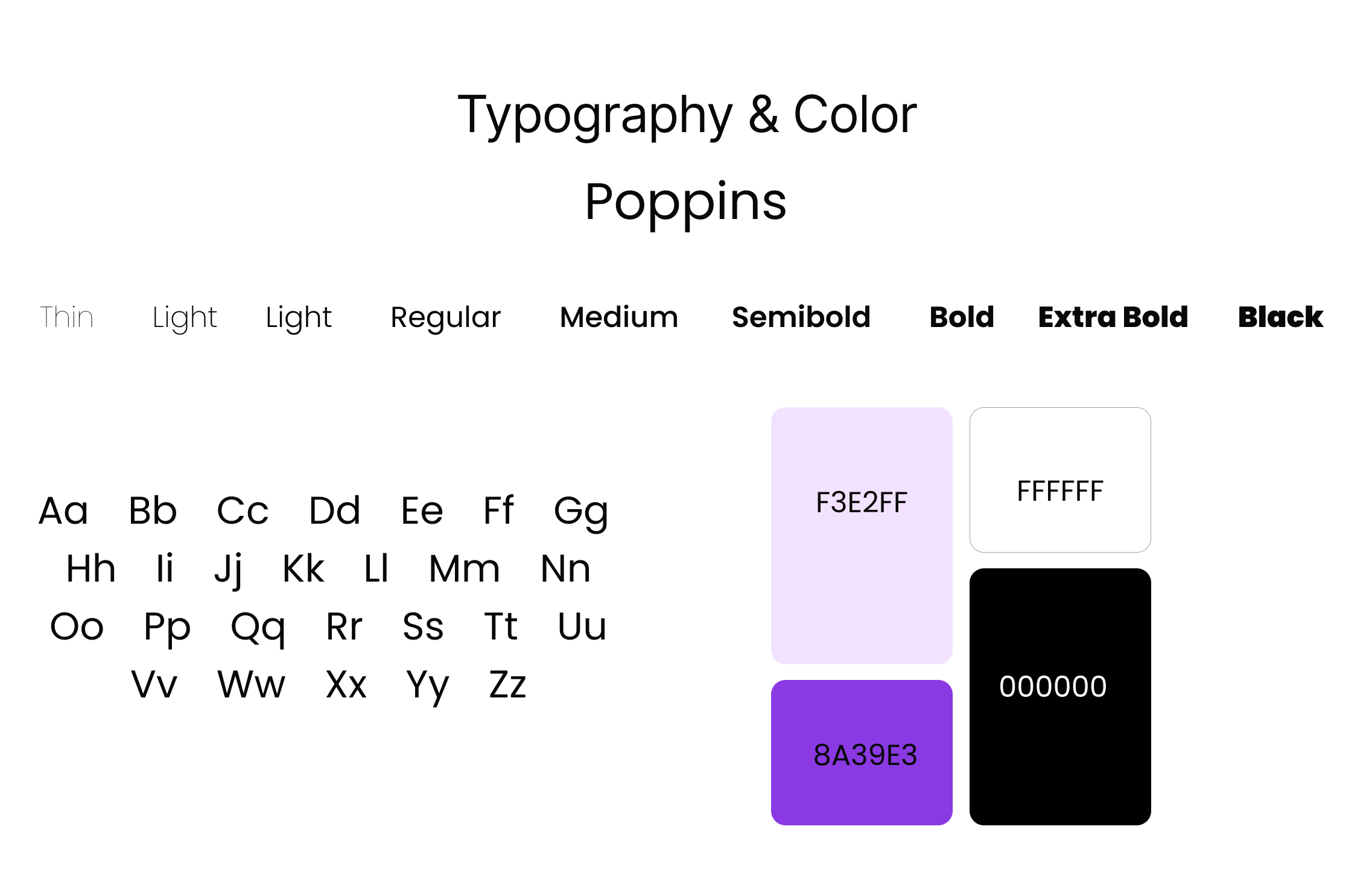
Throughout the process, I incorporated accessibility considerations such as readable typography, clear visual hierarchy, and intuitive navigation. Feedback gathered during testing guided several design iterations, helping me produce a more polished and user-friendly experience.
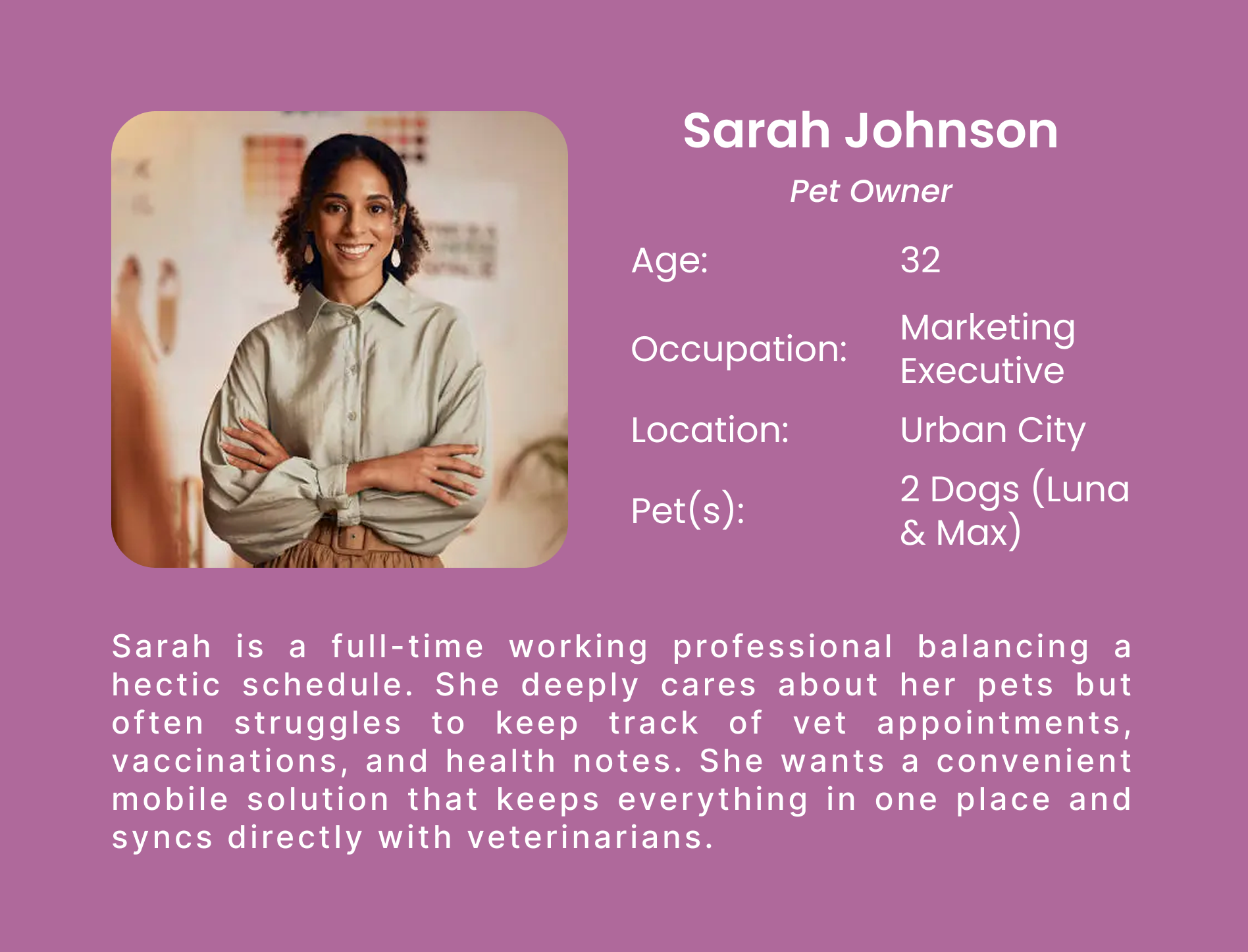
1. Easily book vet appointments without phone calls.
2. Keep all health records organized and accessible for both of her pets.
3. Receive timely notifications for vaccinations and checkups.
1. Forgets vet appointments due to her busy schedule.
2. Hard to manage health information for more than one pet.
3.Has to manually track vaccinations in her notes app.
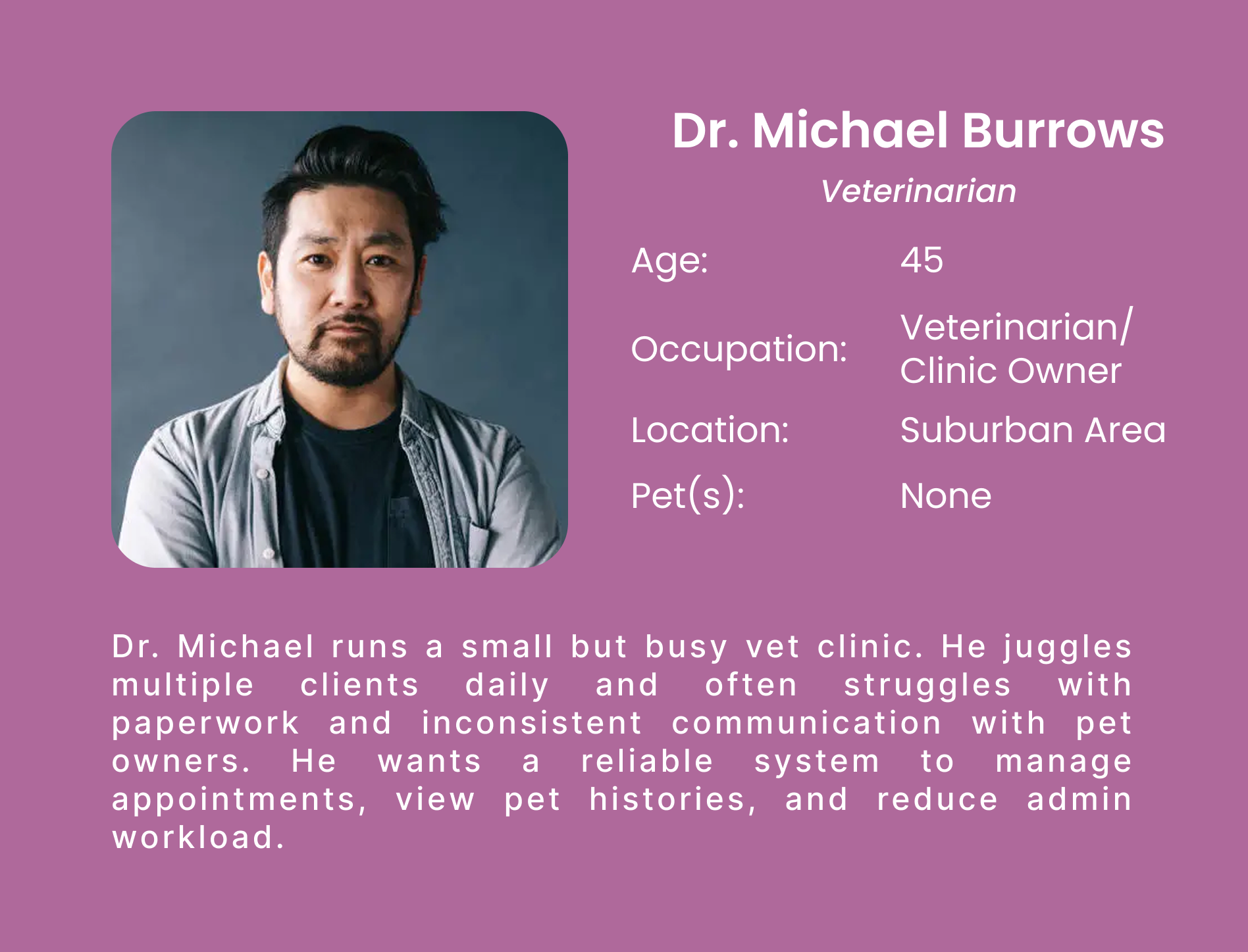
1. Access accurate pet medical histories quickly.
2. Reduce missed appointments and last-minute cancellations.
3. Improve communication with pet owners.
1. Pet owners forget visits, disrupting the clinic schedule.
2. Records are scattered across sheets, files, and WhatsApp chats.
3. Time is wasted manually reminding clients.
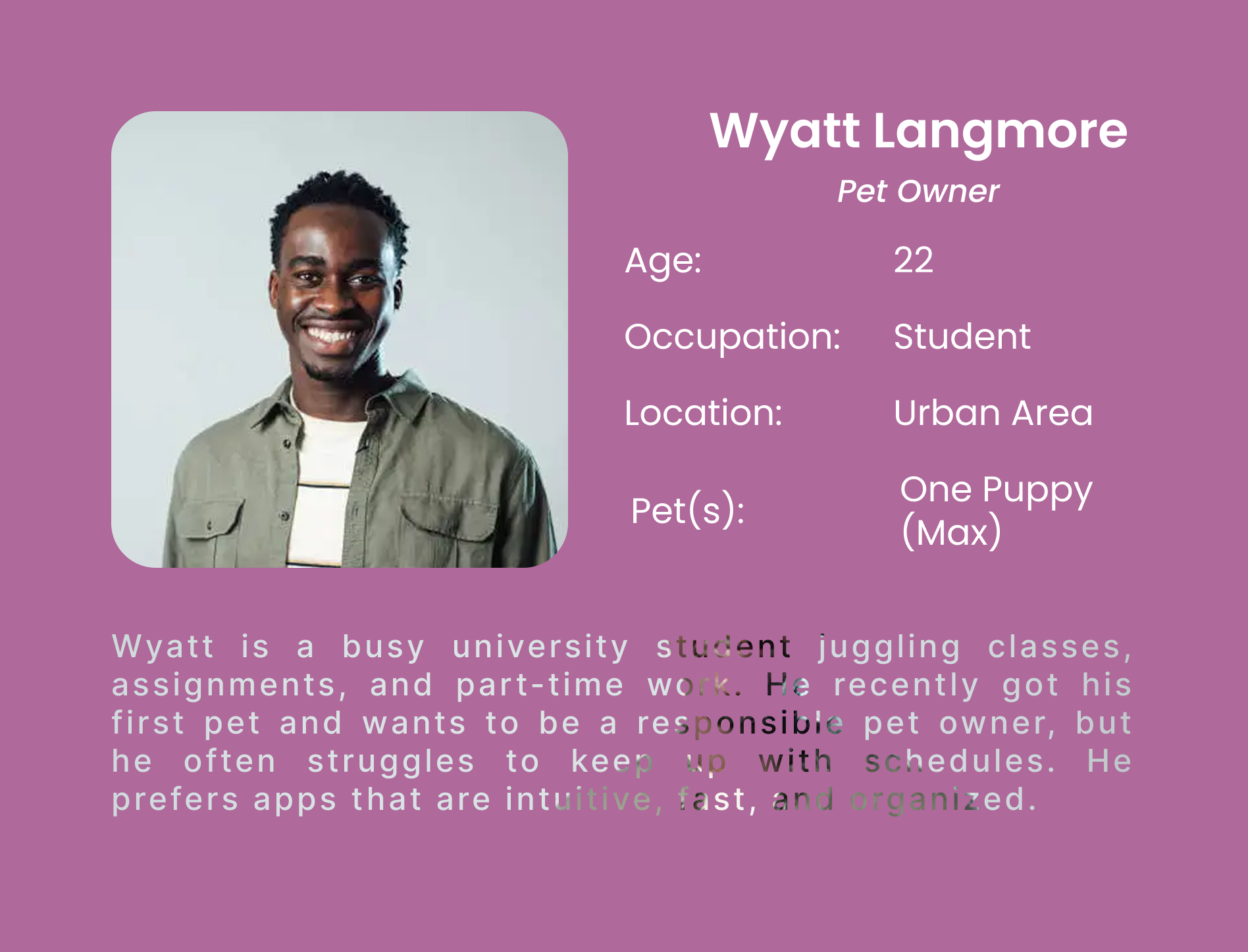
1. Find reliable vet clinics close to campus.
2. Track Max’s vaccinations, deworming, and medical needs.
3. Learn proper pet care from a trusted source.
1. Forgets important vet appointments.
2. Finds it stressful to search for clinics manually.
3. Unsure about proper puppy care routines.
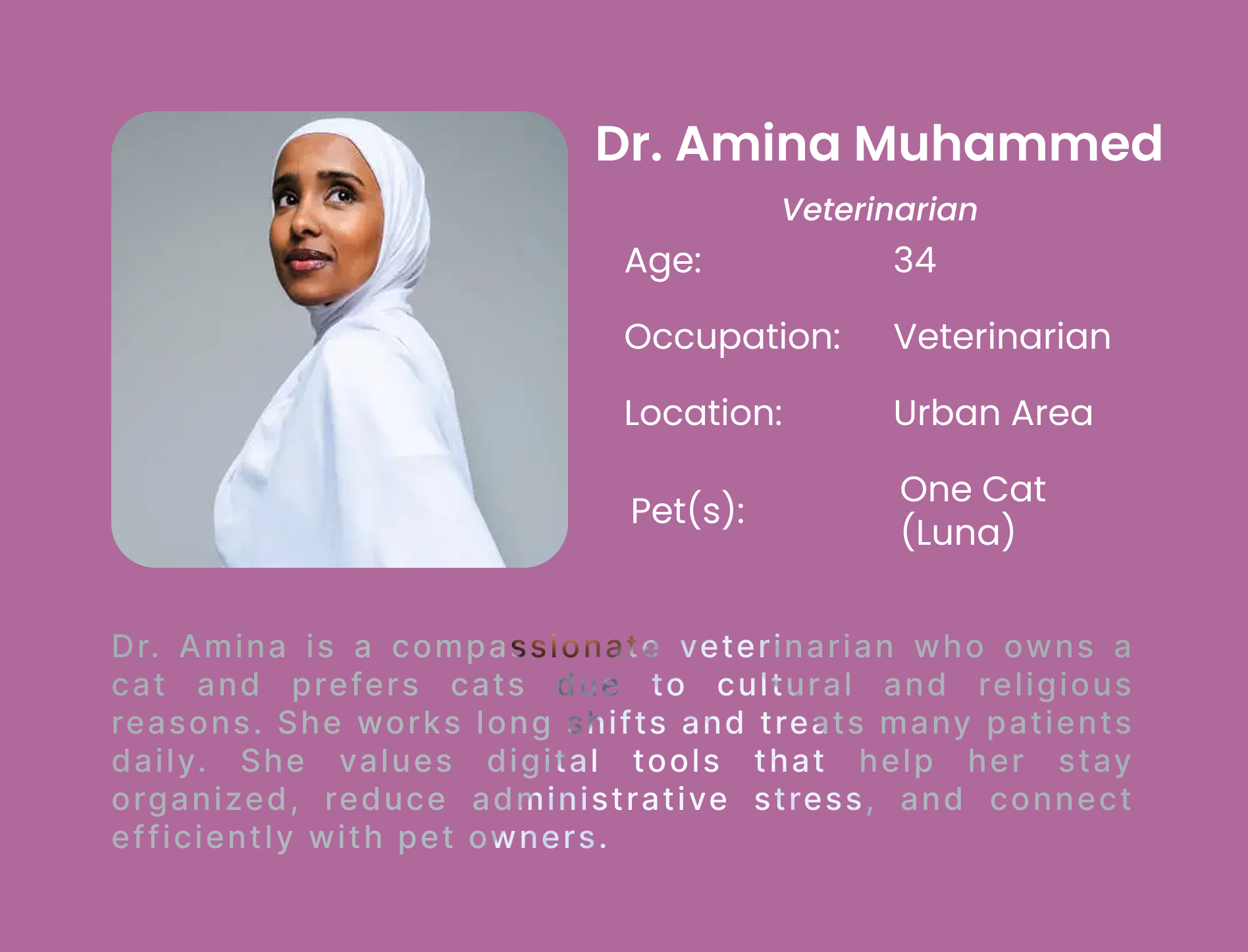
1. Manage multiple pets’ medical records efficiently.
2. View upcoming appointments in one place.
3. Access pet histories quickly during consultations.
1. Pet owners often lose or forget paper medical records.
2. Appointment overlaps and scheduling conflicts.
3. Time wasted searching for patient history manually.
.png)
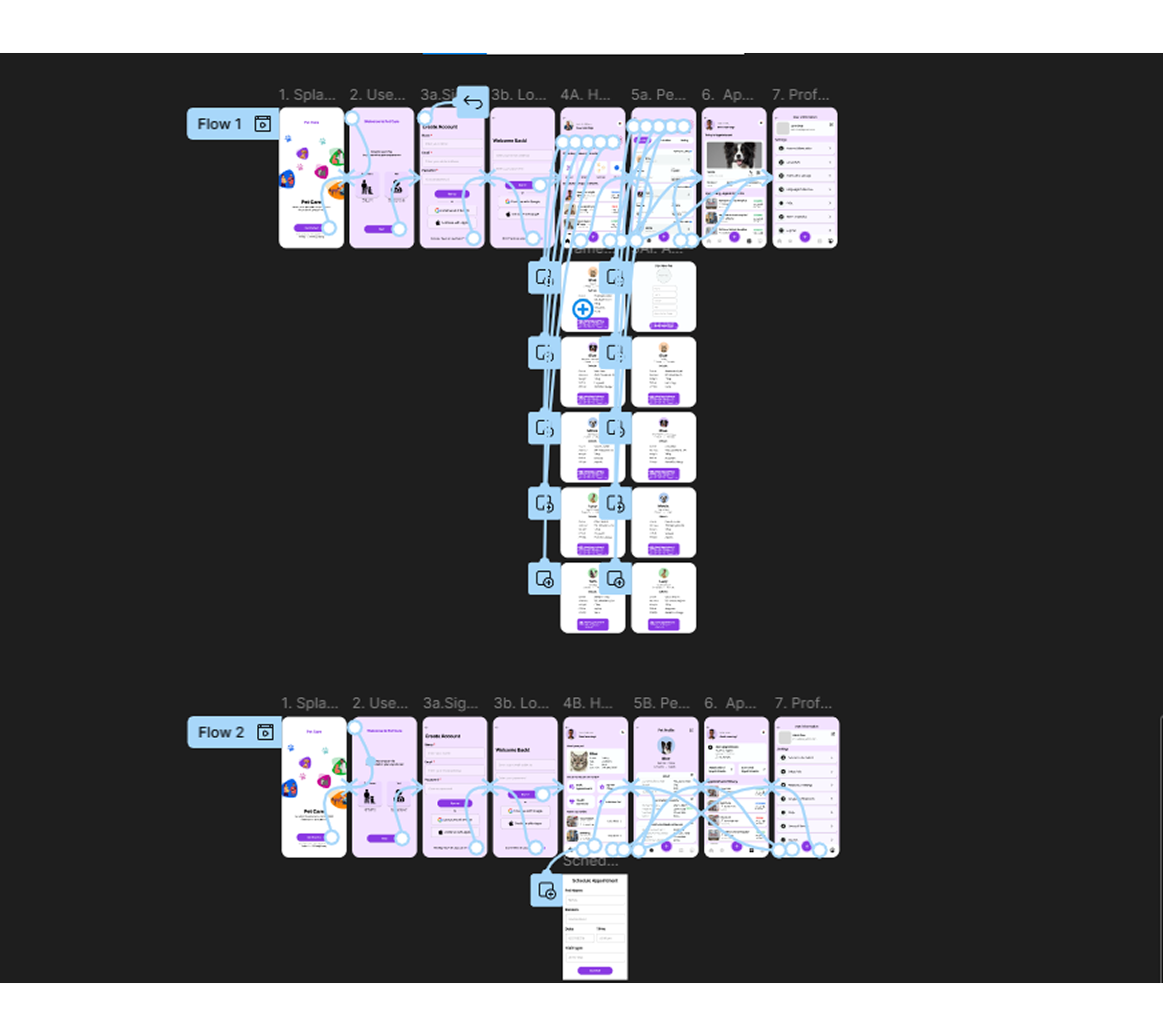 Interact with prototype here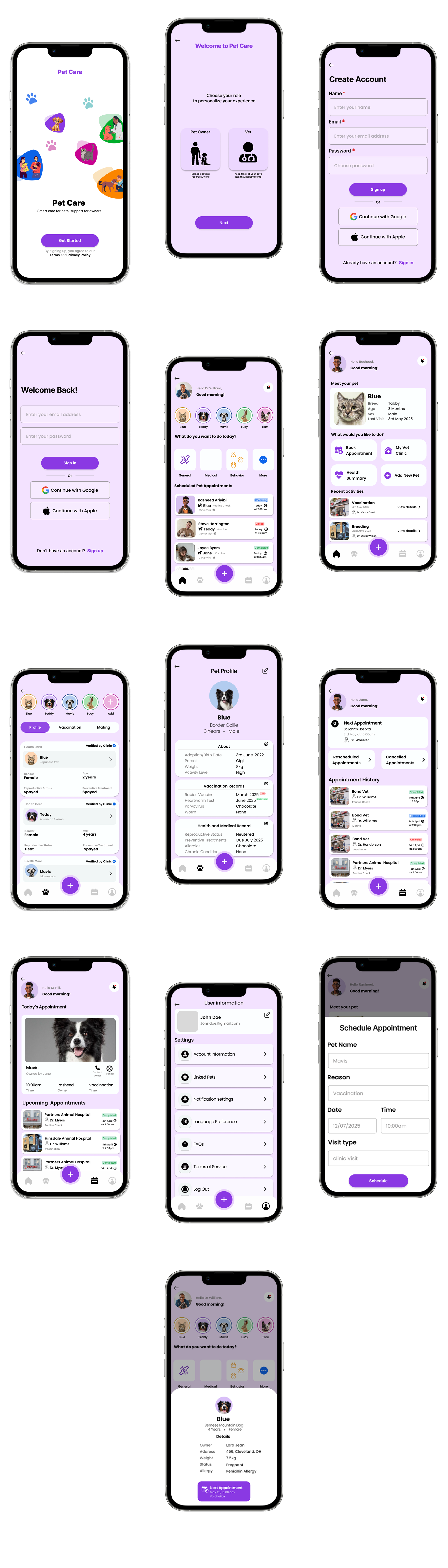
While designing the Pet Care app, I learned that early ideas only serve as a starting point. As I gathered insights from users and analyzed their needs, each stage of the process reshaped the direction of the design. Understanding how veterinarians and pet owners interact with health records, appointments, and daily pet management helped me refine the app’s information structure and user flows more effectively. This project also strengthened my ability to design multi-role systems, plan clear information architecture, and create interfaces suitable for healthcare-related contexts. Moving forward, I will continue to incorporate deeper user feedback and usability testing to validate whether the solutions I designed truly address the core pain points of both vets and pet owners.
This design concept was created to bridge the gap between veterinarians and pet owners by providing a more organized, accessible, and reliable way to manage pet health. The project spanned several weeks from initial research to final prototypes, and all wireframes, flows, high-fidelity designs, and prototypes were created in Figma. As I continue refining Pet Care, my next steps include gathering real-world user data, conducting more structured usability studies, and expanding features such as prescription reminders, emergency vet access, and improved clinic onboarding tools.
Thank you for reviewing this UX case study — I’m open to feedback, collaboration, and opportunities to contribute to meaningful, user-centered projects.


